Tuesday, November 10, 2015

In the Nude

When I was ten years old, I spent a few months living in Germany. It was during a major heat wave so I spent a lot of time at pools -- as did the Germans, who went swimming nude or topless.
German beach
A few years later, when I was living in South Korea, I was introduced to Korean bathhouses called “jijabangs”. The bathhouses feature a variety of flavored pools and saunas, all of which is enjoyed in the nude.  
Jinjibang in Korea
During my semester abroad in Sweden, I frequented saunas around Scandinavia . Another activity that is culturally expected to be done in your birthday suit.  
Sauna in Sweden


Despite the acceptance of nudity in these cultures around the world, Americans are typically considered “shy” by other countries when it comes to nudity.


I’ve fondly reminisce my sauna or bathhouse days to my friends here the States. Most my friends will agree it sounds nice until I mention that this is done naked. They are shocked. “You mean”, they ask, “that you don’t even wear a swimsuit?” “Don’t you feel uncomfortable?”, they question.


I explain that even though at first it feels awkward but you soon realize that you stand out even more by wearing a swimsuit or covering up. Plus, it is a lot more comfortable to not wear anything-- especially in sweaty saunas.


Regardless, my American friends assure me that it would not be for them and would never do something like that.


However, it is not just our own nudity that bothers us. Nudity is also less likely to be seen on American TV or print compared to in Europe. Commercials are less risque and most nudity is kept on certain channels and to later showtimes.


However, American TV and print is becoming more liberal and more nudity is being shown (take for example the shows Naked and Afraid and Dating Naked). However, we are still less open to nudity than our across-the-pond neighbors.


While there is discussion about the impacts of showing nudity, I believe it is important to just note differences in culture on acceptance of nudity. Implications of this mean that certain activities such as bathhouses might not be as easily adopted in cultures such as in the USA and nudity shown in advertising could have a higher chance of offending someone.

For some fun, check out Conan visit to a Korean bathhouse to see what happens when Americans are faced with Korean culture:


Overall, even though we are all human, our culture dictates our behavior in certain settings and makes us more or less likely to accept a certain activity. This cultural norms are also difficult to change and influence consumers to step outside their culture.

What Do You Think: Are American consumers becoming more comfortable with nudity? Why do you think that is or is not?


Thursday, November 5, 2015

Peanut Butter and What?


I love a good ol' PB&J sandwich. I am one of those Americans that keeps an extra-large sized peanut butter in my cupboard and always remembers to pack a small size jar to go with me whenever I travel. There is just a comforting taste to peanut butter that I just cannot describe and cannot go longer than a few days without.

Jar of my beloved peanut butter
If you are American, you are quite possibly nodding your head with me or even sneaking off to your cupboard to grab a spoonful of peanut butter. Or, quite possibly, I've caught you with a peanut butter and jelly sandwich in your hand. Whatever the case, Americans adore peanut butter. (If you are American and do not like peanut butter, I suggest you look at other countries for citizenship).
Now, my fellow PB&J lovers, please do not be alarmed when I tell you this but: peanut butter is not as loved outside the borders of our country.

I have been questioned several times by people all over the globe about my questionable sandwich containing peanut butter and jelly. People have gone as far to tell me that the combination sounds gross or to say that they've tried it and hated it.

International reactions to peanut butter 
That said, through my travels and my international housemates, I have discovered that these poor countries without peanut butter have their own cultural sandwich spreads.

In my house, my poor jar of peanut butter is outnumbered by my Australian housemates' vegemite jars. In case you have not had the "pleasure" of trying vegemite, it tastes like bitter soy sauce. Australians love the stuff though and put it on everything.


Personally I do not care for vegemite in the slightest. In case you do not believe me, Buzzfeed recently had American kids try vegemite to test their reactions:


I guess they didn't like it too!  

What fascinates about peanut butter and vegemite is that they are products that are so loved by one culture but then completely hated by most other cultures. It makes me wonder what causes this nation-wide consumer behavior towards a particular product. 

Vegemite advertisement

Personally, my mom loves peanut butter so I was raised with a peanut butter sandwich in my lunch box most days for school. I believe that being raised with peanut butter all my life has helped me acquire a taste for it and also associate it to my mother and being home. 

A mother grocery shopping
According to an article in the Daily Mail, consumers tend to stick to brands / products that their mothers use to buy. Therefore, it is quite possible, that both Australia and America can blame our obsession with these products on our mothers. 

What Do You Think: Why do Americans / Australians love peanut butter or vegemite? Have you ever tried vegemite and what did you think about it? 

P.S. Happy Peanut Butter Month, dear blog friends! 


Wednesday, November 4, 2015

It's all fun and games until Uncle Sam shows up...

An interesting topic that Seb brought up was the Australian government issuing high taxes on alcohol. This got me thinking about the ways that governments step in and directly try to influence consumer behavior. So for today’s blog post, I would like to take a closer look at the ways the American and Australian government try to control our alcohol consumption.


AUSTRALIAN GOVERNMENT
In order to try to make Australians drink less alcohol and discourage binge drinking, the Australian government has issued multiple taxes on alcohol. Currently there are four different taxes on alcohol which include:
  • Excise (indexed twice annually in line with the Consumer Price Index)
  • Wine Equalization Tax (WET) (based on sales value)
  • Custom Duties (based on alcohol content and sales value)
  • Ten percent Goods and Services Tax on all retail alcohol sales
What all this adds up to is a some very expensive alcohol purchases. Below is a graph that shows how these taxes result on different types of drinks.


There is much discussion whether taxation is an effective method of curbing alcohol sales. As far as my housemates go, these taxes have not stopped them from drinking alcohol. The WET tax is currently under discussion also as it causes cheap wine to be even more affordable as wine is the only alcoholic beverage that is taxed on value not alcohol content.


Many other countries such as Sweden and Norway use heavy taxation to influence consumers to buy less alcohol. Some sides will preach of its effectiveness while others are convinced people will have their alcohol one way or another. If you are interested, check out this study to learn more about the effects of alcohol taxation.


AMERICA


One of the main ways I see the American government trying to influence our consumers from drinking alcohol is from our drinking age. America has the oldest drinking age in the world with most countries around the world allowing people to start drinking by age 18.


Drinking ages around the world


Growing up overseas in Korea (drinking age 18) and with mainly Europeans, I did not have the typical high school experience with alcohol. Most of my friends were allowed to drink alcohol by their parents and as foreigners we were never questioned about our ages when being served alcohol. Overall, this ended up taking away the “cool” and “rebellious” factor of drinking and I never felt peer pressure to drink.


Stereotypical American party scene
I was shocked coming to the USA and seeing how obsessed people were about drinking alcohol -- especially when they were underaged. I immediately questioned the decision to have such an old drinking age as it ended up making alcohol seem more “thrilling” rather than just a beverage.


Just like taxation, there are two sides for and against this drinking age. If you are interested, check out this website to read more about it.


DISCUSSION
While taxation and drinking ages attempt to influence consumer behavior towards alcohol, I keep going back to the book, Nudge by Richard Thaler and Cass Sunstein. Instead of trying to directly influence consumers on their alcohol purchases through these methods, what if governments attempted to nudge people towards less drinking? Some nudge ideas I have are:
  • Make alcohol difficult to find and buy (only sold in liquor stores)
  • Display the harmful effects of alcohol near the shelves or on the bottles
  • Provide a “receipt” to consumers at the end of the month that details their alcohol purchases and how it compares to the rest of the community
Those are just a few ideas but I would be interested to see if these nudges would be more effective than these direct interventions.


Using community comparisons

What do you think: Do you think government intervention through taxation and drinking ages are effective? What are some nudges you would do as a government to decrease alcohol consumption?

Friday, October 30, 2015

Trick or Treat?


My house has been a buzz lately. There is only one topic of conversation between my housemates and that is....

HALLOWEEN.

My housemates are beyond excited to experience an American Halloween. They assure me that Halloween is no where as big of deal in Australia as it is here and cannot wait to experience a stereotypical Halloween. They each have purchased 2 - 3 different costumes, bottles of fake blood, and thoroughly mapped out their entire week of Halloween festivities.

However, it isn't just the bright-eyed Aussies that are excited about Halloween, it's pretty much everyone.

There is no denying it -- Americans LOVE Halloween.


But just how much do we love this fall holiday? Here are some Halloween statistics:

  • Halloween is 2nd largest commercial holiday in the US. 
  • 64% of American adults celebrate Halloween. 
  • Americans spend close to $7 billion on Halloween. 
    • $1.2 billion spent on adult costumes
    • $950 million spent on children's costumes
    • $350 million spent on pet costumes 
  • 93.7% of Halloween shoppers will buy candy. 
Plus check out this interesting infographic: 


How did American Halloween get to be this way?

Halloween in the 1960s

Even though Halloween started in the UK, Halloween started to become more popular in the early 20th Century in the USA when people realized it could be celebrated by different immigrant communities. Whole towns could come together as people started to recognize it as an American holiday. In the 1950s and 1960s, the baby boomers helped Halloween gain more popularity with the rise of suburbs. Then with the rise of horror films, teenagers and young adults became more involved with the holiday and raucous parties starting happening. Marketers and retailers have since taken hold of this holiday and capitalized on creating merchandise for decorating, costumes, and candy.

Learn more about Halloween history here.

Commercialized Halloween is spreading around the world now thanks to globalization. Halloween started in France in 1997 as a marketing ploy welcomed by businesses who wanted to make profit before Christmas as well as consumers who wanted something fun to do in a struggling economy.
Halloween in France

It is also gaining popularity in China and Indonesia as a fun excuse to dress up and throw costume parties. The combination of advertising, folklore, TV shows and movies have fueled acceptance of this holiday.

Halloween in China

Even though people may argue that Halloween exists because it is fun. However, from my perspective, Halloween is a result of great marketing and smart retailers. With the potential to make profits off costumes, decorations, and candy, marketers have taken advantage of an old (and religious!) holiday and made it appealing for kids, teenagers, and adults.


However, I am not complaining about the mind games these marketers have done to me. Without Halloween, the animals in my family would not have these cute but extremely overpriced costumes.

My dog, my aunt's dog, and my rabbit in their Halloween costumes


Monday, October 26, 2015

The Dangers of Going to Buy Milk


We have all been there, haven't we? Realized we are out of milk so decide to take a quick trip to the grocery store. However, despite our itty-bitty shopping list, we still come out of the store with bags of stuff.

Oh, the masterminds behind grocery stores. 

I am also sure you already have heard strategies of grocery stores about the placement of milk in the back of the store, how certain items get placed at eye level, and the enticing end-of-aisle displays.  From my experience grocery shopping overseas, these principles typically stay the same. However, during my time in Turkey (as well as Sweden in a few cases), I got to experience a completely different layout of grocery which I found to impact my behavior in grocery stores.


After some research online, I have identified the layout I experienced in Turkey to be called a "race track" or "loop" store. The major aisle of this store begins at the entrance and then loops around the store before returning the customer to the entrance of the store to check out their items.


American grocery stores typically used a grid layout. In this layout, consumers can go down the multiple aisles at their will and grocery store managers must be strategic on the placement of their items as a result.
I found the racetrack grocery stores in Turkey to be both wonderful and irritating at the same time. I liked this layout because it helped me be more efficient shopping. In theory, I would only have to keep walking along the track and pick up all the items I needed. There would be no need to figure out which aisles I needed to go to or incorrectly guess where an item would be because I would pass every item.
My mood when grocery shopping is not time consuming or confusing 

However, this some times did not work. For example, I would realize I forgot to pick up olive oil once I got to the end of the loop while the olive oil section was at the start of loop. I would then have to go against the flow of traffic to get the oil. I also found I bought a lot more random items. As a result of being exposed to all of the products, I would constantly stumbled upon things that were not on my list and I would buy them.

My feelings realizing I forgot once I reached the end of the loop

For that reason, I believe the grid layouts of grocery stores give consumers more control on the items we look at depending on the aisles we choose to walk down. However, this adds time to our shopping trip as we have to find the locations of these items by ourself.

What Do You Think: Would you prefer to shop at a grocery store with a loop layout or a grid layout?


Tuesday, October 20, 2015

Is Bigger Always Better?


As you heard in a few times in my housemates’ interviews, one of the main aspects that stood out to them when they arrived here was the large size of everything.


Drink size comparison (the line is the American Size)


“Go big or go home” is a coined American phrase. It is no secret… we like "BIG". People coming to the USA for the first time are always quick to marvel at the large size of our drinks, houses, cars, and, yes, even our people.


You don’t believe me on this? Check out these five graphs (source) that show how America has gotten bigger:
  1. Our Food
The average restaurant meal is now four times larger than it was in the 1950s.


  1. Our Chickens
Our chickens have grown substantially since the 1950s
  1. Our People
American women have increased 18.5% in weight since 1960 and American men have increased 17.6%


  1. Our Cars
The Honda Accord has increased 20 inches in length in 30 years.

  1. Our Houses
The size of our houses have increased 120% while our household size has decreased.

This all has got me wondering -- why is everything in America so large?


According to the Times (2010), Americans are enamored with big things because of our history. It all started with the idea that we had so much space to spread out with. This idea that we had the ability to go westward and claim our land might be the root cause for our obsession with the huge. The American Dream thrives on this idea in that we can have everything we want if we work for it -- whether that is a bigger house or just a super-sized Coke. America consumerism does not like to put limits. As we like to say, “bigger is ALWAYS better”.


Comparisons of Dinner Plate Size

However, at what point do we say enough is enough? When is bigger not neccisarily better? Big houses and big cars put more strain on our environment and we know that obesity is unhealthy.


Before you know it, we will all end up like the people in Wall-E

As we read and discussed in class, nudges towards normal sizes could be used. For example, as discussed in the Mindless Eating Youtube Video, we can use smaller plates to reduce the large amounts of food we consume.


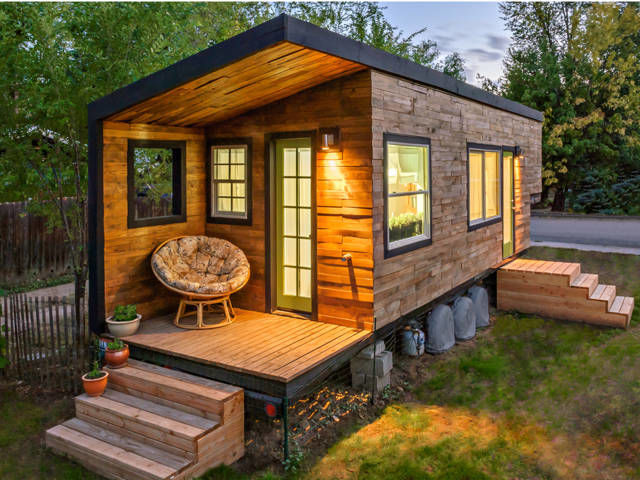
Maybe we are already seeing shifts in the American consumer mindset though with the popularity of tiny houses and smart cars. Who knows, maybe in the future I will have to write a blog post complaining about the small sizes in America?


A tiny house -- A possible backlash from large houses?
What Do You Think: Will sizes in America continue to grow or are we shifting towards more moderate sizings?

Wednesday, October 14, 2015

“Does it count if I have a "Save the Planet" bumper sticker on my truck?”


A comment that has stood out to me from a past housemate (she was from Germany) was:


“If Montanans are so into being environmentally-friendly, then why do all of them drive cars -- especially massive ones?”
This contradiction reminded me of our ZMET exercise. During the ZMOT exercise, I experienced several occasions where a person brought in an image and started to talk about it and halfway additional questioning it seemed they had completely switched opinions.


A ZMET interview

I find a similar interesting behavior when it comes to Americans / Montanans and our love of cars and the environment.

In Europe, everyone having and driving a car is not the norm. Biking is much more common and public transit works well and is frequently used. However, in the US, especially Montana, everyone has a car and uses that at their main mode of transportation.


USA transportation vs. European transporation


What do we have in common though? We both boost of being eco-friendly.


It is surprising to me that most people do not realize how addicted and obsessed with cars we are. I had a business professor once tell the class that “everyone in the world wants to own a pick-up”.


An American Symbol: The Pick-Up Truck
From my experience living and traveling around the world, I have not found that the case. Most people are looking for smaller cars as they use less fuel, take up less space, and are easier to drive. My European friends even consider my Honda Civic as a large car.


European-sized cars 
One argument is that with all of this space in our country, each of us can drive our cars. However, just because we CAN does it mean we SHOULD?


According to National Geographic, cars are America’s biggest air quality compromisers and produce more than one-third of all U.S. air pollution.


Graph showing the CO2 emissions of different transportation modes


Even though, cars are becoming more eco-friendly. It is difficult to trust these statistics after the recent VW scandal.


I am not suggesting we all need to give up driving cars or that you are hypocrite if you drive a car. However, I do think we need to start thinking as a nation about the impact of our love of driving cars and ways we nudge people towards car usage.


For example, in Bozeman, large cars are readily sold and marketed while small cars are looked down upon. Our public transportation of the Streamline is unreliable, inconvenient, and infrequent. Biking and walking is dangerous with the lack of developed bike paths as well as sidewalks and sidewalk lighting.


The Streamline, while it provides alternative transit options, is still unreliable
To nudge people to take up more eco-friendly transportation, we could:
  • Market and sell more small-sized cars
  • Invest in our public transportation and increase their convenience and frequency
  • Make cities and towns more bike and walker friendly


A great example of bike lanes, sidewalks, and street lighting

What do you think: Do you think America can be nudged towards these more eco-friendly transit or are we too set into our car-loving culture? What are some nudges you can think of to nudge people to take up new transit options?